


This guide is reviewed annually to reflect current Florida cremation law.
Losing someone you love is one of life’s most difficult experiences. In the midst of grief, families are often expected to make practical decisions and navigate unfamiliar legal requirements.
If you’re reading this while facing a recent loss, know that you are not alone. Feeling uncertain, overwhelmed, or emotionally exhausted is completely natural. If you’re wondering where to start, we invite you to read our guide on What to do Immediately When Your Loved One Passes.
Florida has specific laws in place to guide the cremation process, designed not to overwhelm families, but to protect your loved one’s dignity and ensure everything is handled correctly. This guide explains those requirements in clear terms so families can feel confident and informed during a difficult time.
Is cremation legal in Florida?
Yes. Cremation is fully legal in Florida and is a common choice for families across the state.
With that said, it is carefully regulated. Because cremation is permanent, Florida law requires certain steps, such as documentation, authorization, and identification, before it can take place. These safeguards exist to ensure every person is treated respectfully and that families’ wishes are honored.
Who can authorize cremation in Florida?
Florida law requires cremation to be approved by a legally authorized person, typically a next of kin or designated in advance by the individual who passed. Written authorization is required before cremation can take place.
In most situations, authorization follows this order:
- A spouse
- Adult children
- Parents
- Siblings
- A legally appointed guardian or executor
- A person designated in writing by the deceased
The authorization must be given in writing and includes instructions for what should happen to the cremated remains.
Required documents for cremation
There are several documents required before cremation can take place. While this may sound overwhelming, your cremation provider typically handles most of the process on your behalf.
Families typically encounter:
- Written cremation authorization. A signed document from the legally authorized person giving permission for cremation.
- Death certificate. Completed by a physician or medical examiner and filed with the state.
- Burial-transit permit. Issued by a local registrar before final disposition, including cremation.
- Declaration of intent for remains. This specifies how cremated remains will be handled and is required under Florida law.
Cremation waiting period in Florida
Florida law requires a minimum 48-hour waiting period after death before cremation can occur.
In many cases, the timeline may be slightly longer due to completing the death certificate, gathering authorizations, issuing permits and the medical examiner review, when necessary.
This waiting period is not meant to delay families unnecessarily. It allows time to confirm documentation, verify identity, and ensure all legal requirements are met before cremation proceeds.
Do you need a funeral home for cremation?
Cremation in Florida must be handled by a licensed provider, such as a funeral establishment, direct disposal establishment, or crematory facility. While families may not always need a full-service funeral home for a traditional service, cremation still must be arranged through a licensed professional who can file required documents, obtain permits, coordinate transportation and maintain legal and identity records. This ensures compliance with Florida regulations and safeguards for the deceased.
Florida medical examiner requirements
Before cremation can happen, the cause of death must be determined. In many cases, a physician completes this certification. However, if the death was unexpected, unattended, or involved certain circumstances, the medical examiner may need to review the case.
Cremation cannot proceed until this review is complete. While this can sometimes extend the timeline, it is an important safeguard that protects families and ensures everything is handled responsibly.
What happens after cremation?
Florida law also outlines what happens once cremation is complete.
- The cremation provider keeps identification and disposition records.
- Cremated remains are released to the authorized person.
- Families may keep, scatter, or inter the remains according to their wishes and local regulations.
If remains go unclaimed for 120 days, the provider may legally arrange final disposition according to regulations.
2026 updates families should know
Florida’s cremation laws are based on long-standing statutes focused on protection, clarity, and dignity. Recent updates continue to reinforce:
- The need for written authorization before cremation
- Clear instructions for handling cremated remains
- Licensing requirements for cremation providers
- Legal protections for families and professionals acting in good faith
Why these laws matter for families
Cremation is irreversible, which is why Florida has so many strict regulations in place to confirm identity, obtain legal authorization, document the deceased’s wishes, prevent family disputes and protect public health and safety.
While these steps can feel overwhelming, they exist to provide peace of mind for you. They create a framework that supports families rather than leaving them to navigate decisions alone. Florida regulations also hold cremation providers accountable and operating according to very high standards.
How Cremations of Greater Tampa Bay helps families navigate Florida laws
When you’re grieving, the last thing you should have to worry about is navigating legal requirements on your own. A compassionate, licensed cremation provider helps carry that burden by patiently guiding you through each step.
Cremations of Greater Tampa Bay supports families by:
- Help completing cremation authorization
- Coordination of death certificates and permits
- Communication with medical examiners when needed
- Clear explanations of timelines and expectations
- Assurance that all Florida laws are followed
- Gentle, respectful care throughout the entire process
Whether you are planning ahead or making arrangements after a loss, having knowledgeable guidance can make a meaningful difference.
Florida’s cremation laws are in place to protect your loved one and provide structure during a difficult moment, not to make the process harder. If you are planning ahead, you’re offering a meaningful gift to those you love. Pre-planning reduces stress, documents your wishes, and allows family members to focus on remembrance rather than logistics.
Above all, cremation is not just a legal process. It is a deeply personal one. It is about honoring a life, preserving dignity, and giving families space to grieve, remember, and begin healing.
At Cremations of Greater Tampa Bay, our goal is simple: to provide trustworthy guidance, legal compliance, and quality care, so families can focus on remembrance, healing, and honoring the life of someone they love.
Understanding Additional Cremation Expenses
Even after choosing a basic cremation, some additional costs may apply depending on needs and preferences:
Death Certificates
Certified death certificates are often needed for legal and financial matters. While the state charges a base fee (commonly around $10–$15 per copy), some providers handle ordering them for you — sometimes with a small administrative fee.
County Medical Examiner Fees
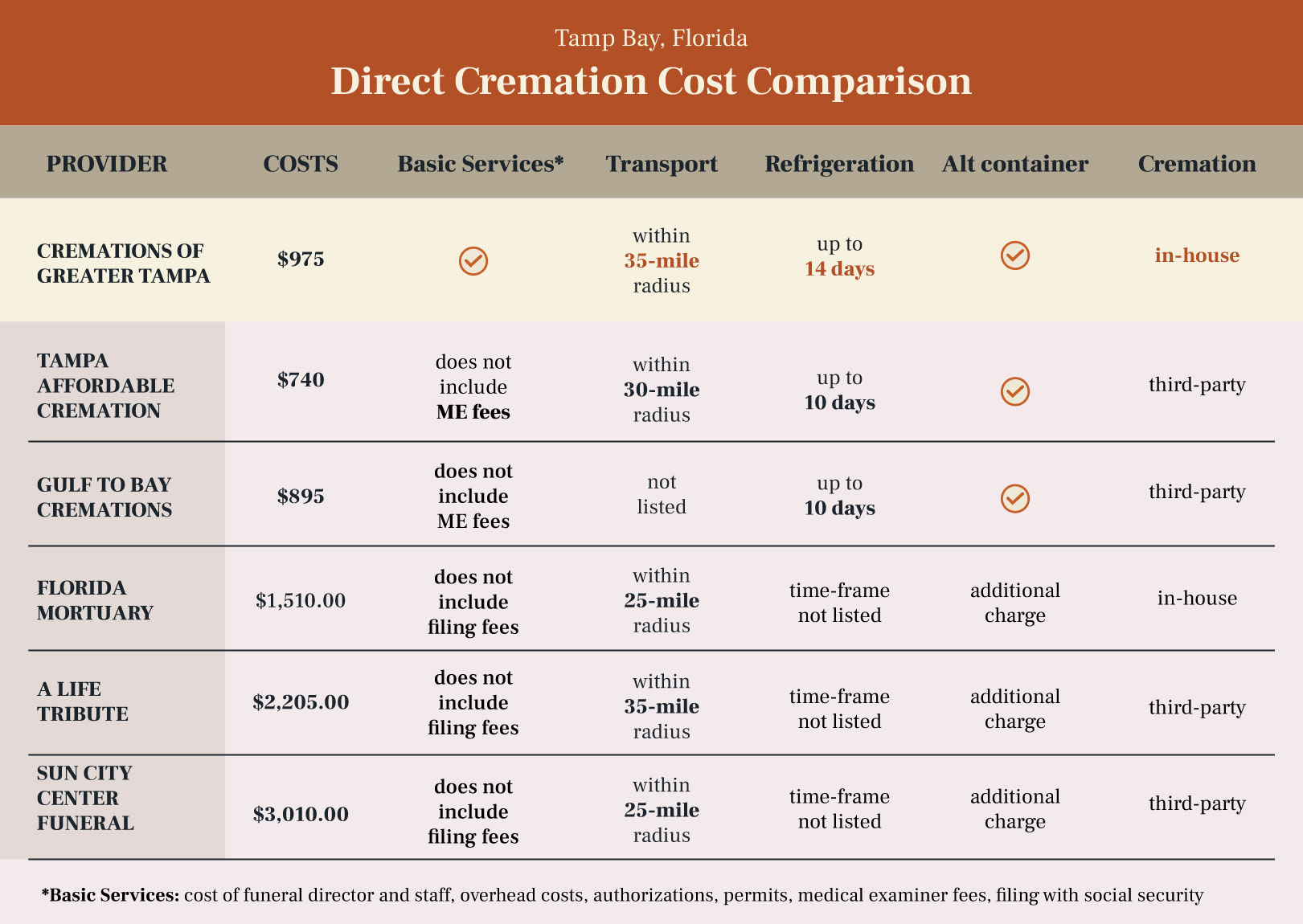
Florida counties may assess separate cremation authorization fees which vary slightly depending on jurisdiction. At Cremations of Greater Tampa Bay we cover these fees for you, while many cremations providers will charge an additional fee.
Urns, Jewelry, and Memorial Keepsakes
These items offer families a way to hold memories close — from simple urns to engraved jewelry. Pricing can range from modest to premium, based on material and style.
Witness Cremations
Some families find comfort in attending or witnessing the moment of cremation. This service is available with certain providers, sometimes for a nominal fee.
How Cremations of Greater Tampa Bay Keeps Costs Affordable
At Cremations of Greater Tampa Bay, our mission is to treat every family with warmth, respect, and clarity — without unnecessary stress or hidden costs. We’re honored to walk with you and provide clear, honest information at every step.
Our Care Promise — All-Inclusive Transparency
We believe families deserve clarity and confidence in their decisions. That’s why we built our approach around four key commitments:
-
- Pricing Transparency
What we quote is what you pay — with no surprise fees for essential services. You choose the services and products that matter most, and we clearly explain what each includes. - Continuous Custody
At Cremations of Greater Tampa Bay we own and operate our own crematorium. Every individual entrusted to us is treated with dignity and integrity and never leaves our care or is sent to a third-party. - Available 24/7
No call centers or automated response. When you call us, you speak to a real person, no matter the day or hour.
- Pricing Transparency
- Paperwork Done Right
Our team will guide you through Florida laws and regulations and take care of all the necessary paperwork, thoroughly and accurately. We’ll coordinate with hospitals, hospice and other facilities and provide guidance every step of the way.
Learn more about our Care Promise and how we support you during this emotional time with honesty and compassion.
Facing end-of-life planning for someone you love is never easy. When it comes to understanding cremation cost in Tampa Bay, we hope this guide helps you feel more confident and informed — not overwhelmed.
Cremation doesn’t need to be confusing or prohibitively expensive. With transparent pricing, a clear understanding of services, and compassionate support, you can make choices that honor your loved one’s life and provide peace for your family.